
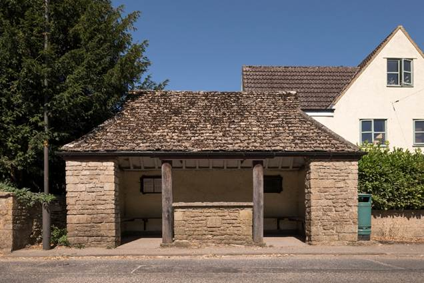
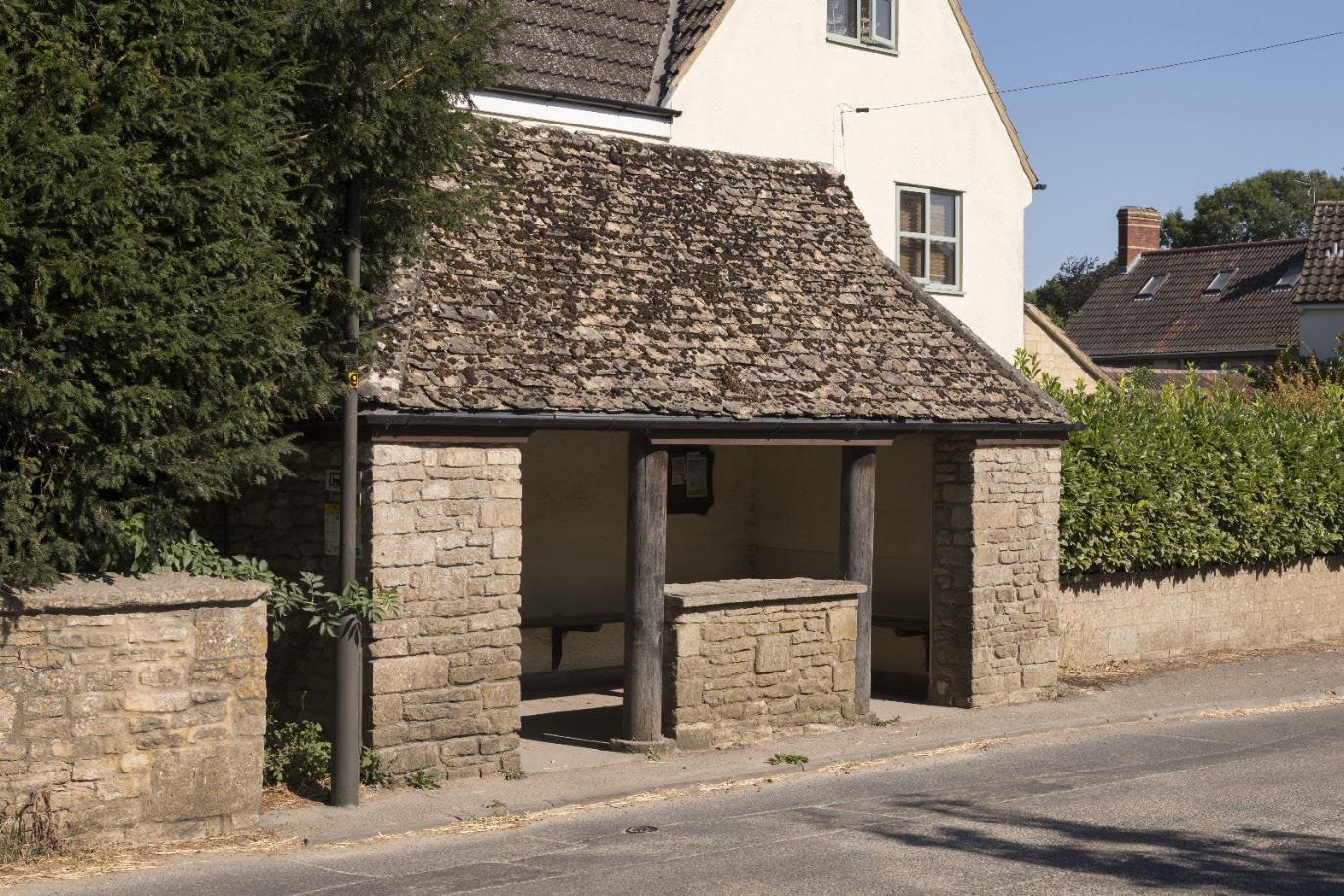
Hillesley Bus Shelter, High Street, Hillesley, Gloucestershire. Designed by Berthold Lubetkin, 1951-1952, to celebrate the 1951 Festival of Britain.
REMARKABLE GLOUCESTERSHIRE BUS SHELTER DESIGNED BY WORLD-RENOWNED ARCHITECT, BERTOLD LUBETKIN, NOW GRADE II LISTED
A bus shelter in Gloucestershire has been listed at Grade II by the Department for Digital, Culture, Media and Sport (DCMS) on the advice of Historic England.
Hillesley Bus Shelter was designed by world-renowned Modernist architect Berthold Lubetkin and built in 1952 as part of the Festival of Britain celebrations.
Parishes across Britain were encouraged to mark the Festival with lasting improvements in their local area. In 1950, the Festival Office ran a competition to design new rural bus shelters, stipulating that proposals should be based ‘on the use of local materials, so that the structures will fit harmoniously into the surrounding landscape’.
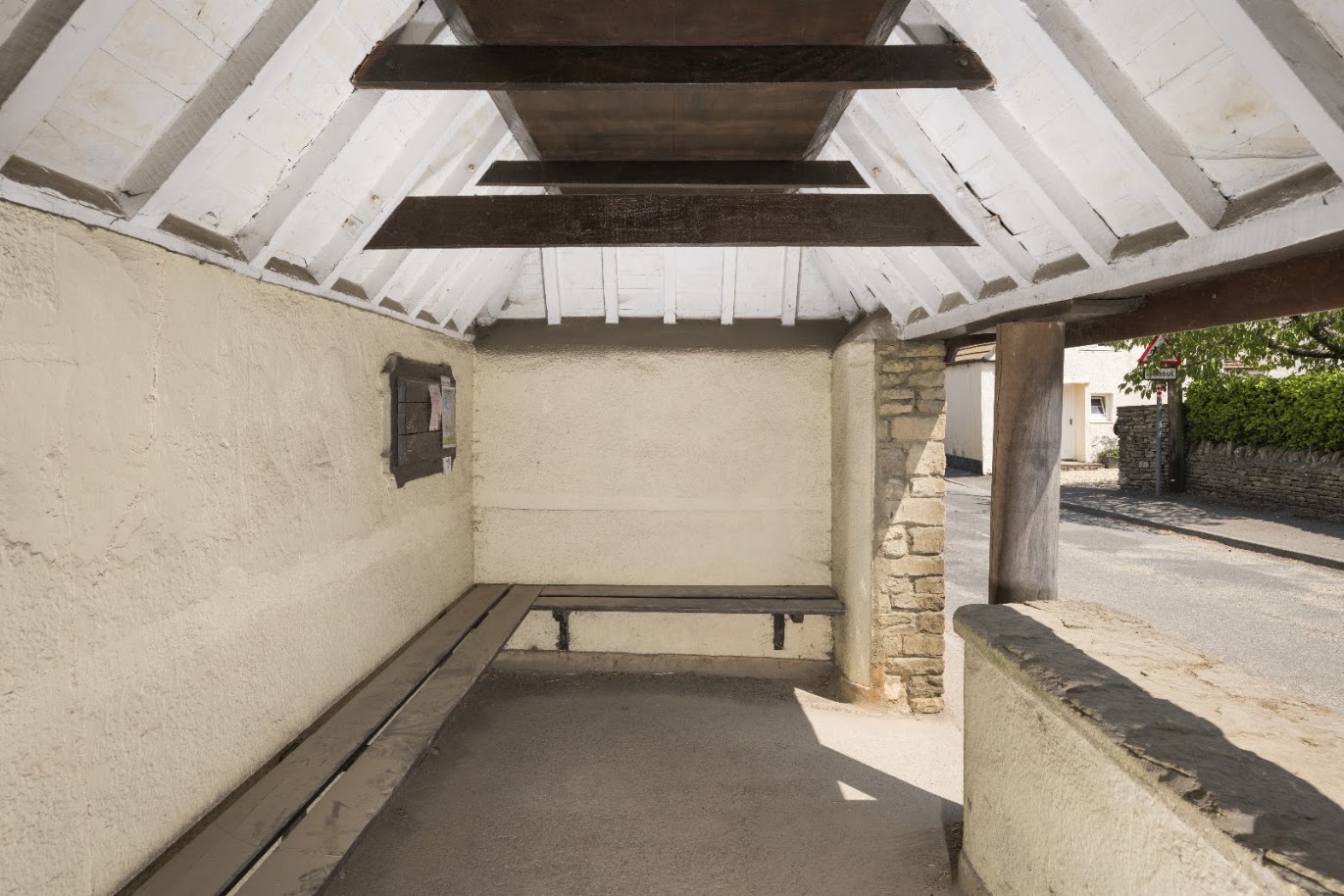
Lubetkin had retired to the Gloucestershire village of Kilcott in 1950 and volunteered his services to design the shelter for nearby Hillesley Parish Council. Disillusioned by politics and architecture in the post-war period, the design of the bus shelter coincides with his retirement from the profession.
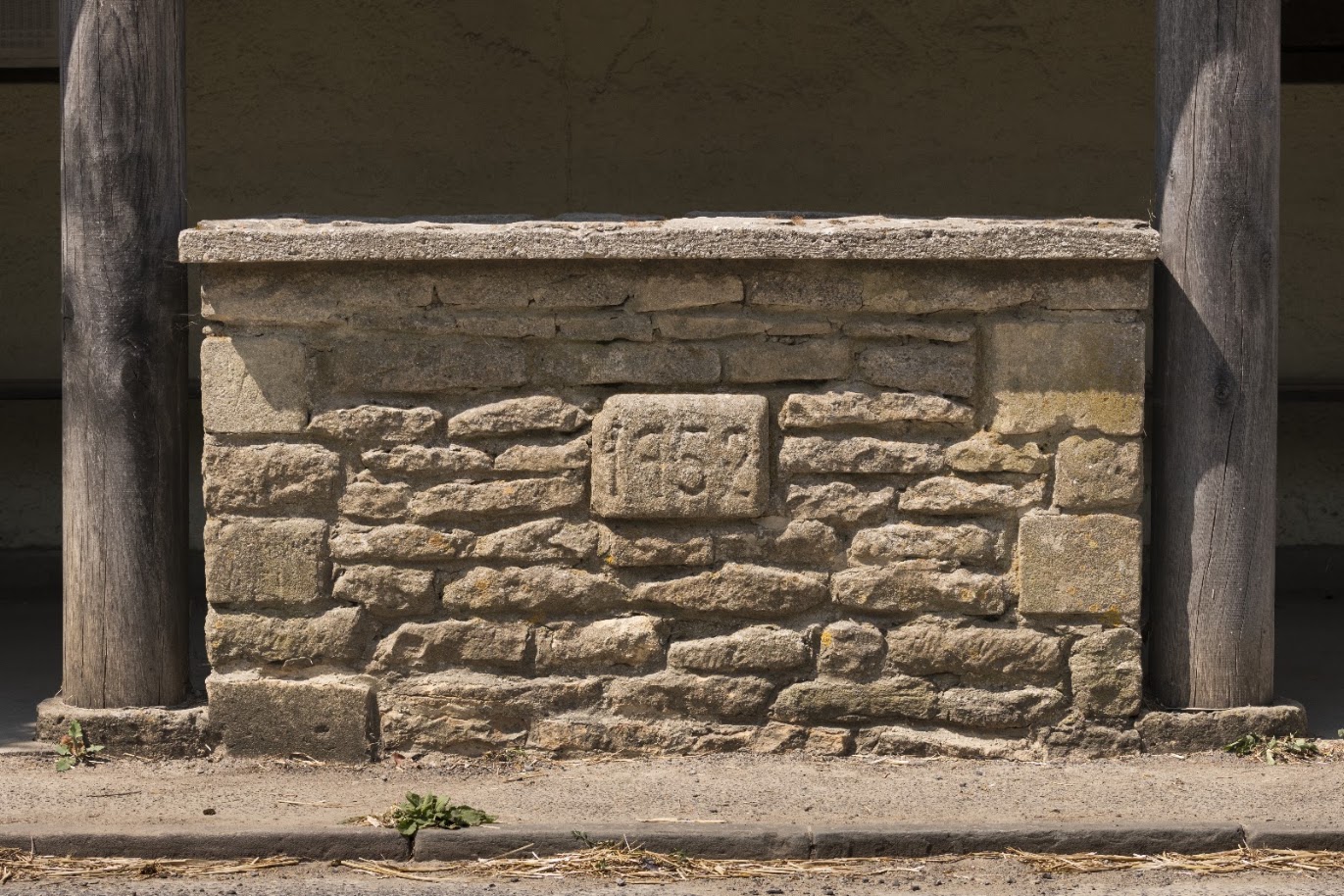
Detail of date stone, view from the south-east.
Hillesley bus shelter is made with distinctive Cotswold limestone masonry and a stone slate roof. The simple, well-composed structure is a unique example of Lubetkin working in a traditional manner rather than the more radical style for which he is best known. Hillesley bus shelter is one of two listed bus shelters constructed as part of the Festival of Britain, the other is in Farmington and is also listed at Grade II.
Rachel Williams, Historic England Listing Adviser, said: “This bus shelter might look like an ordinary part of the daily commute, but it has a fascinating story to tell. As one of the surviving structures from the Festival of Britain, it’s a little piece of post-war history hiding in plain sight. Listing it means we can help make sure this unassuming but important part of our everyday surroundings is around for future generations to enjoy.”
Catherine Croft, Director of Twentieth Century Society, said: “Modest but definitely not Modernist, this traditional Cotswold vernacular bus shelter demonstrates the remarkable versatility of its famous architect, Berthold Lubetkin.
Lubetkin’s famous maxim was ‘Nothing is too good for ordinary people’ – even those waiting for the next rural bus service! From the pioneering Finsbury Health Centre to the sculptural Penguin Pool at London Zoo, we’re delighted to see his Festival of Britain shelter join them on the national register of listed buildings.”
Berthold Lubetkin
Berthold Lubetkin (1901-1990) was born in Born in Tbilisi, Georgia, and trained as an architect in continental Europe. He settled in Britain in the early 1930s and became one of the leading figures of the modernist movement in Britain. His architectural practice, Tecton, was one of the most radical of its day. Its designs including the Penguin Pool and Gorilla House at London Zoo and the housing developments Highpoint I and II in Highgate, London, all now listed at Grade I, are celebrated as outstanding examples of British modernist architecture.
The Festival of Britain
The Festival of Britain was a government-sponsored event in the summer of 1951 celebrating and promoting Britain’s excellence in design, technology, industry, architecture, science and the arts.
While London’s South Bank was the focal point for Festival, the bus shelter scheme was one of several initiatives to encourage parishes across the country to participate in the celebrations by making lasting improvements in their communities. Only four Festival of Britain bus shelters are thought to exist in England – Hillesley; Stone Street, Kent; Bramfield, Suffolk; and Farmington, Gloucestershire, which was listed at Grade II in 2008.
Why this listing matters
Grade II listing recognises buildings of special interest. It ensures that any future changes to are carefully considered to protect the building’s historic character.
Protecting remarkable places and buildings supports Historic England’s commitment to safeguarding the nation’s heritage, ensuring that communities can continue to access and benefit from historic buildings and places that connect people to their past.